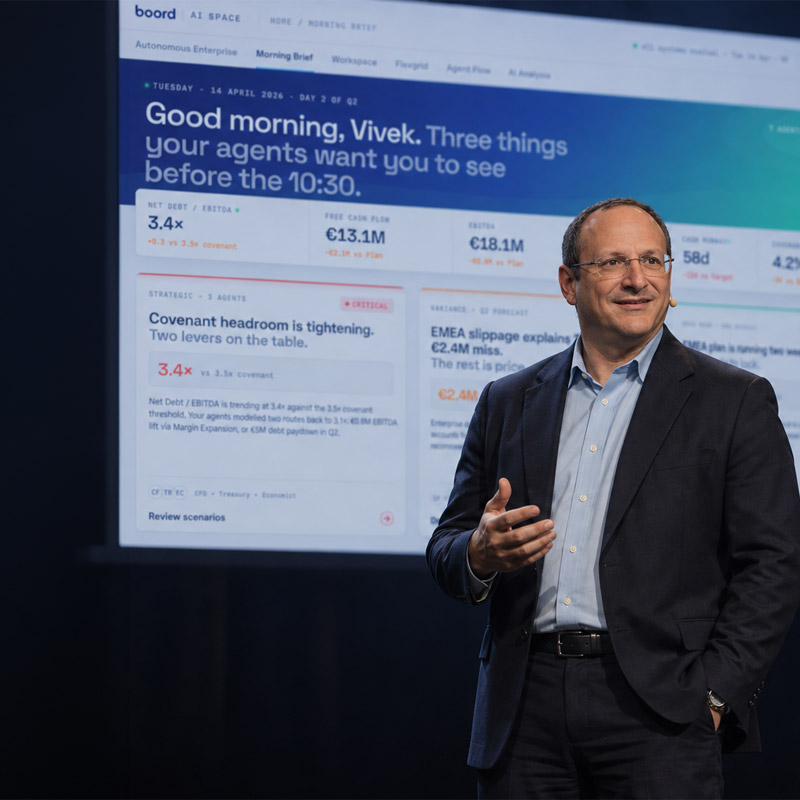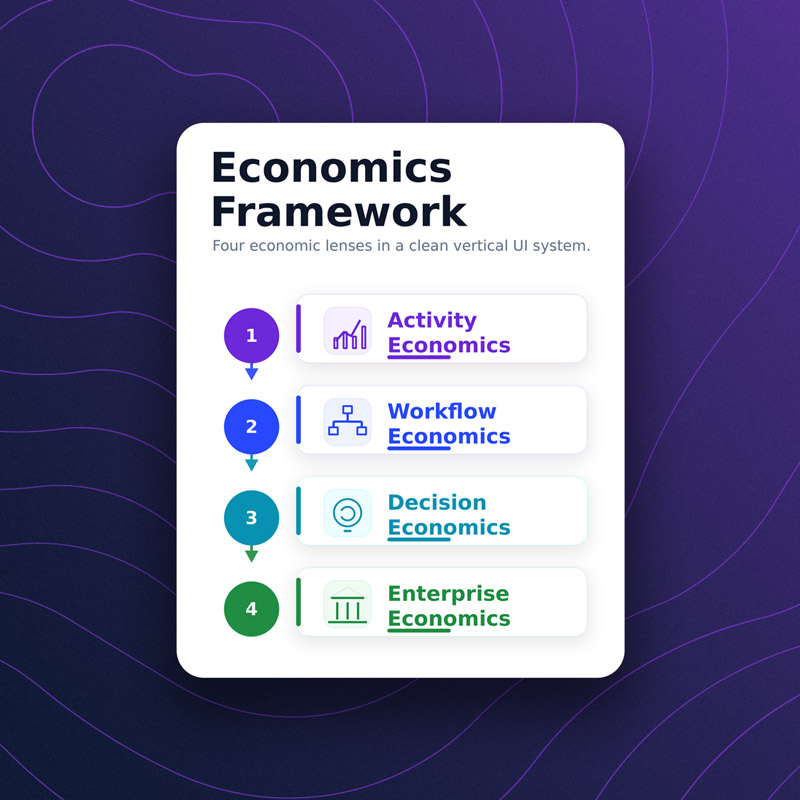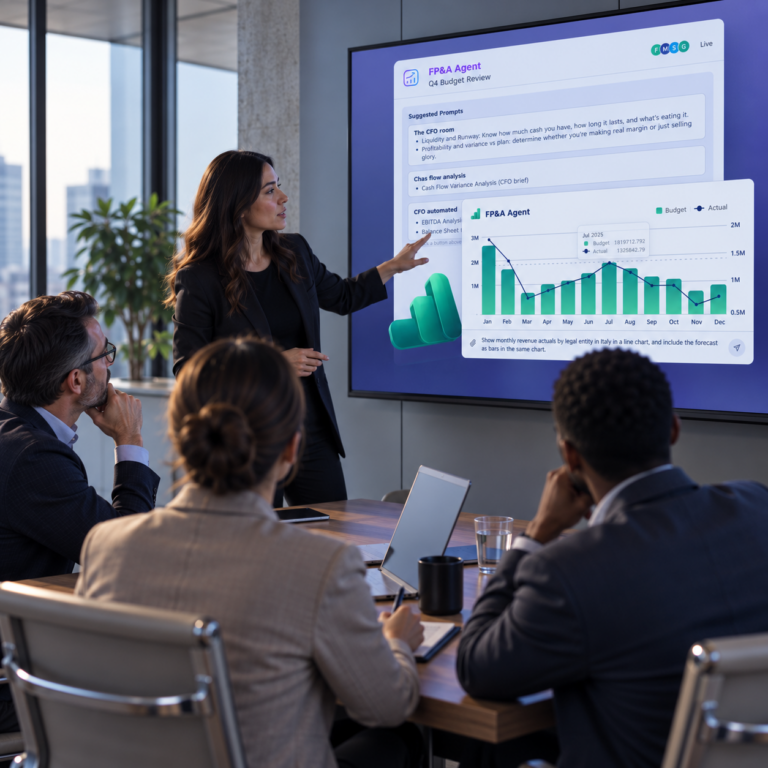

People first encountered generative AI as a private superpower. It could summarize a document, answer a question, plan a trip, draft a presentation, or make a blank page less intimidating. That first wave mattered because it changed expectations. If software could help an individual think and produce faster, then enterprise leaders had to ask a larger question: what happens when AI can take on not just information work, but the decision workflows that shape how a company operates?
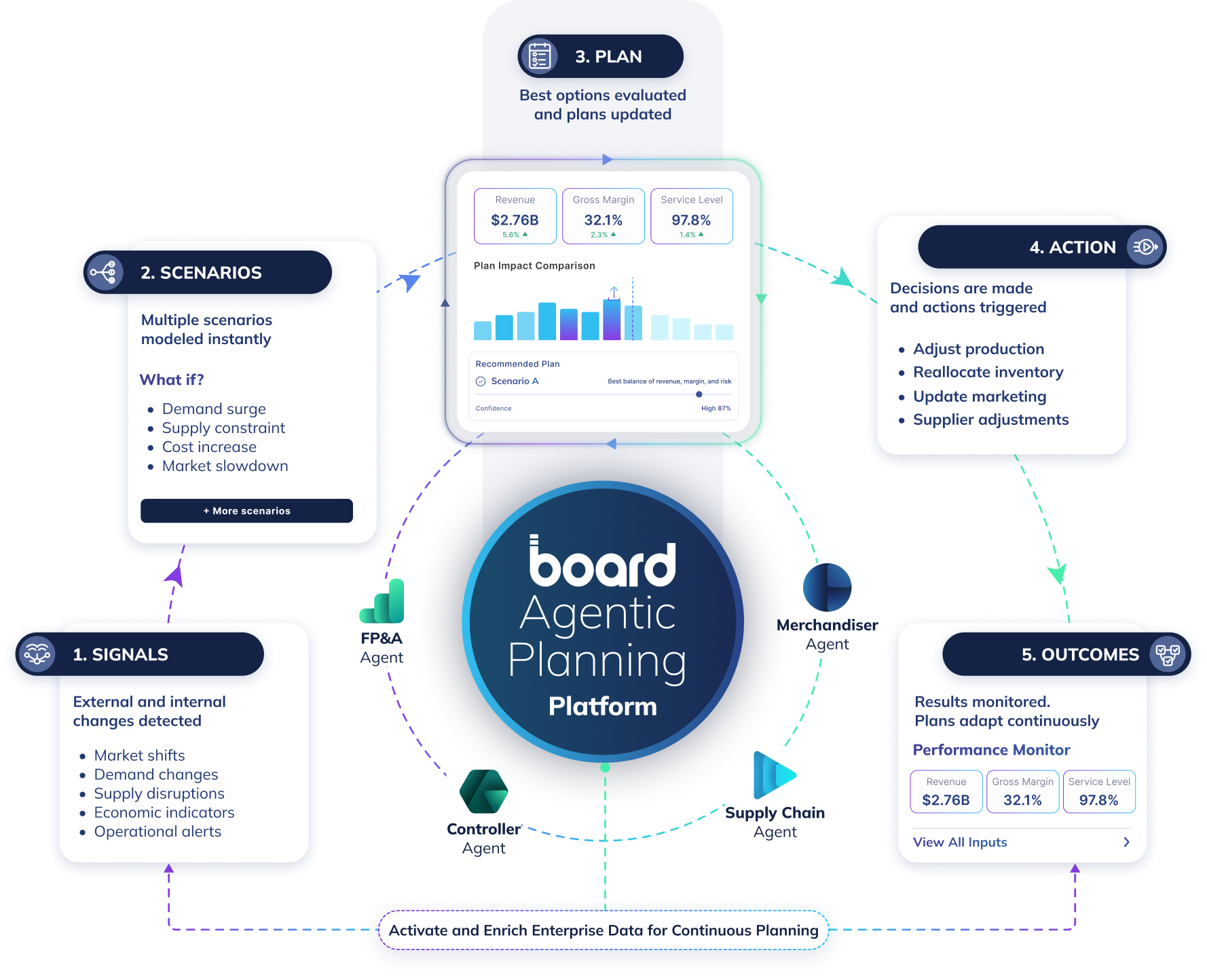
The answer will not be found by putting the word “agent” on every process. I believe the bigger shift is a new planning rhythm: Continuous Planning. This shift will become reality as enterprises move from periodic cycles to an always-on enterprise planning system that senses change, investigates options, models consequences, recommends action, escalates when needed, and learns from outcomes.
That is a different ambition from automation. Automation simply asks which human task software can perform. Continuous Planning asks how a company can keep its plans responsive to changing conditions, using more context, more alternatives, and less organizational delay.
Automation Was Built for the Work We Could Describe
For decades, enterprise software has reduced human workload by automating activities that could be described in advance. Let’s take a relatively simple example: invoice management. The system likely checks receipt of goods or services, applies supplier terms, routes exceptions, posts accounting entries, and triggers payment. This kind of work can be decomposed into rules, sequences, approvals, and system updates. ERPs and other business applications have been successful precisely because much of operational work has a repeatable, relatively rote structure.
But business life has always contained a second class of work: decisions where there is no perfect recipe:
- What will demand look like for a new product?
- How should scarce supply be allocated across customers and markets?
- What is the right base case for next year, and what downside scenario should the business prepare for?
- Should a manufacturer build a new plant or continue using contract manufacturers?
- How much critical-part inventory is enough to preserve service levels without locking up too much working capital?
As our enterprise customers know, these are not one-click decisions. They are multi-faceted, multi-step processes, usually made under time pressure and with imperfect information. They require governed data, clear assumptions, realistic constraints, robust scenarios, risk evaluation, and importantly, cross-functional alignment. Traditional software can support some parts of this work, and the decision itself often returns to human experts because the organization needs judgment, not just execution.
Agents Change the Boundary Between Process and Judgment
We have entered a new paradigm where agentic AI changes this boundary. Agents are still software, but they are software that can reason through ambiguity, use different tools, compare options, and operate across multiple steps. That matters in two ways.
First, agents can improve the exception layer of already automated work. A conventional system may stop because a supplier’s name is missing, a product attribute is incomplete, or a data field does not match the master record. But an agent can investigate surrounding context, infer a likely answer, explain its confidence, and route the case for human review when the risk is too high. For example, when a product record lacks its season, an agent could extract that attribute from accompanying product text, allowing the forecasting or assortment process to continue. The proposed value should still be checked when confidence or business impact warrants review. This does not eliminate governance. It actually makes governance more targeted: people spend less time resolving routine breakpoints and more time reviewing meaningful exceptions where human judgement is actually required. At Board, we’ve started calling these human-agent boundaries as, “appropriate autonomy.” Agents can affect both well-defined processes and complex decisions, but the larger opportunity is supporting complex decisions that traditional software cannot fully handle.
Second, agents can support more complex decisions that were never ripe for automation. They can analyze many more occurrences, test more assumptions, search for comparable situations, propose scenarios, and prepare recommendations faster than a human team could do manually. In a supply-constrained environment, for example, an agentic workflow could identify where demand has diverged from forecast, evaluate inventory in transit, compare customer and margin impacts, test allocation scenarios, and prepare a recommended trade-off for the responsible team.
The salient point is not that the agent has replaced judgment; it is that the organization can bring more analysis to judgment, earlier and more often. Better decisions are a potential result, not an automatic one: they depend on reliable context, sound assumptions, and accountable review.
Speed Is Important, but Cadence Is the Real Breakthrough
The obvious benefit of agents is speed. They can review more signals, assemble more evidence, and prepare more alternatives in less time. But speed alone is not the deepest change. The deeper change is cadence.
It’s often shocking how many enterprise decisions still run on calendar time. Forecasts are refreshed monthly. S&OP cycles follow that typical monthly rhythm. Budget scenarios are prepared offline, in advance. Significant exceptions may trigger ad hoc meetings or war rooms when the business has changed faster than the decision process can respond.
Agentic AI makes a different cadence possible: a continuous planning rhythm that paves a path to the adaptive enterprise. When your enterprise deploys agents that can continuously monitor signals, identify material changes, evaluate options, and prepare recommendations, planning and decision making is no longer forced to wait for the next formal cycle. In S&OP, this could mean automatically adjusting a supplier request or transferring stock between locations when the change is within policy, while preparing higher-impact decisions for an accountable human to approve. A surge in regional demand, a supplier decommit, a change in commodity prices, or a shift in customer behavior can become the start of a governed decision workflow, not a surprise discovered at the next review meeting—often too late to take corrective action.
Some actions will remain low risk and can be executed automatically within policy while others will be prepared for human approval. The important design question is not whether humans are in or out of the loop, it is which decisions require human judgment, what information does that person need to make that judgment, what authority do they have to approve or reject the recommendation, and how will the outcome teach the agentic system to improve the decision next time. This will also be the opportunity to redesign the process, away from these fixed cadences.
The Market Is Learning That Tools Are Not Enough
This is where many enterprise AI deployments now feel the gap between individual productivity and business-wide impact. McKinsey’s 2026 State of AI research found that nearly nine in ten respondents report regular AI use in at least one business function, while only 37 percent report positive EBIT impact. McKinsey also found that high performers are distinguished by workflow redesign, not just tool adoption.
Microsoft’s 2026 Work Trend Index points in the same direction. Its definition of frontier professionals includes advanced use of agents for complex or multi-step work, routine workflow redesign, and participation in repeatable AI-enabled practices that can scale beyond the individual. But with these individualistic improvements, Deloitte’s 2026 research adds a governance warning: only 21 percent of surveyed organizations report a mature governance model for agentic AI, even as many expect agent use to expand.
The pattern is clear. Enterprise advantage will not come from scattering agents across disconnected tasks. It will come from redesigning work around the decisions that matter, then giving agents the context, permissions, escalation rules, monitoring, and feedback loops required to operate safely inside those workflows.
Decision Context Becomes Enterprise Infrastructure
For agents to support consequential decisions, they need more than data access. They need decision context. That includes shared business definitions, planning models, assumptions, constraints, deterministic calculations, scenarios, approvals, ownership, and auditability. Without this enterprise context, an agent will generate a plausible answer that most likely cannot be reconciled to the plan, defended by finance, approved by operations, or executed with confidence.
This is why planning will become one of the most important enterprise domains for agentic AI. Planning already sits at the intersection of data, judgment, financial impact, operational constraint, and accountability. It is where signals become scenarios, scenarios become trade-offs, and trade-offs become commitments.
At Board, we describe this foundation as the Contextual Decision Layer for Continuous Planning: a governed way to connect enterprise data and AI with the business semantics, planning logic, workflows, permissions, and controls required for decisions.
The New Leadership Question
The first software era asked leaders to standardize processes. The digital era asked them to connect processes. The agentic era asks them to continuously improve how decisions are made.
Finance and operations leaders should prioritize agentic use cases by the importance of the decisions they support, not just the volume of tasks they automate. Where is the organization slow to detect change? Where do exceptions drain experts’ capacity?
The goal is not to choose between automation and human control. Agents can investigate, prepare scenarios, compare options, and take low-risk actions within policy. But leaders should reserve their experts’ attention for consequential decisions and equip them with timely evidence and clear trade-offs.
That model depends on learning from review. Human feedback improves future recommendations only when the organization captures it, evaluates outcomes, and feeds what it learns back into the workflow or model. With that discipline, planning can become more continuous and responsive without making every decision automatic.
The companies that learn this first will build organizations that sense change sooner, understand consequences more clearly, and act with greater confidence. Their competitive advantage will come from a new planning rhythm: one that adjusts as conditions change and learns from every single decision.